

Material Engineering and Strength Testing
The Material Engineering and Strength Testing Laboratory is a state-of-the-art research and service facility specialising in the comprehensive analysis of the properties of structural materials and finished technical components.
Material engineering in practice: comprehensive testing of the mechanical, structural and environmental properties of materials and structural components. Thanks to state-of-the-art equipment and a wide range of services, it provides professional support for industry and academia in the field of assessing the durability, quality and reliability of materials.
Our laboratory is equipped with state-of-the-art apparatus enabling precise strength testing, which is essential both at the design stage and during the validation of materials used in various industrial sectors – from the aerospace and automotive sectors to the energy sector and biomaterials engineering.
The laboratory’s equipment includes, amongst other things: an X-ray microtomograph, a scanning electron microscope (SEM), a portable optical microscope, an acoustic camera and a vibration analysis kit, a metallographic sample preparation kit, a salt spray chamber for corrosion testing and an impact tester. Such a wide range of equipment enables the laboratory to carry out both non-destructive and destructive testing, structural and chemical analysis, and the assessment of the durability and resistance of materials under various operating conditions.
The laboratory offers a wide range of testing services
- mechanical strength tests using static methods (tensile, compressive, bending, torsion and fatigue tests),
- impact tests and assessment of fatigue strength,
- hardness tests (static, dynamic, scratch tests),
- analysis of the structure and chemical composition of materials (quantitative and qualitative),
- testing and assessment of protective coatings and technological joints (welded and heat-sealed),
- identification of defects in 2D/3D components, inspection for cracks, corrosion and inclusions,
- measurements of surface roughness and layer thickness,
- tests in a simulated operating environment, with the capability to conduct tests at temperatures ranging from -150 °C to +350 °C.
Thanks to its extensive technical facilities and a team of experienced specialists, the Laboratory provides reliable support in the areas of materials development, component certification, quality assessment and the optimisation of engineering solutions.
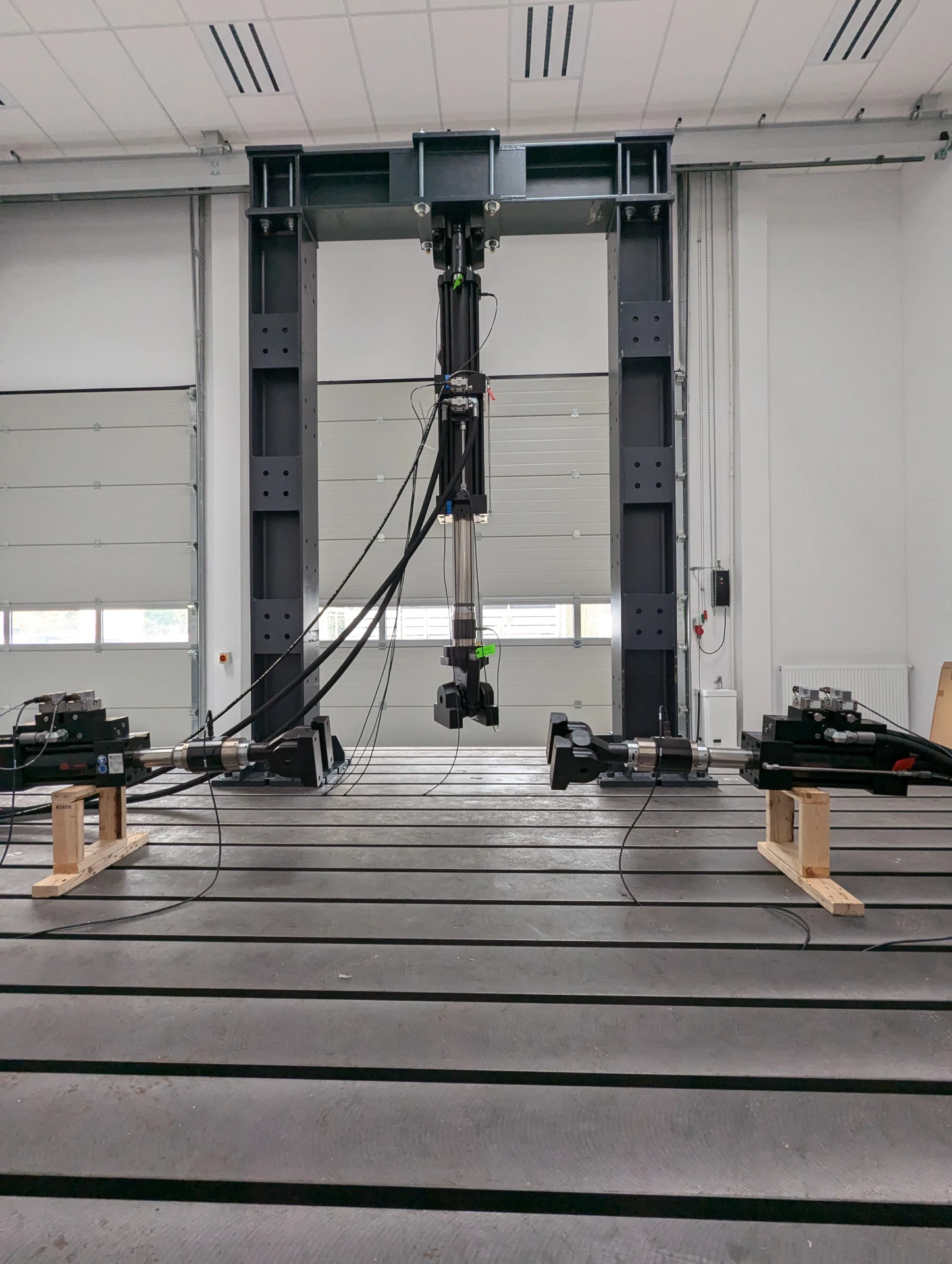
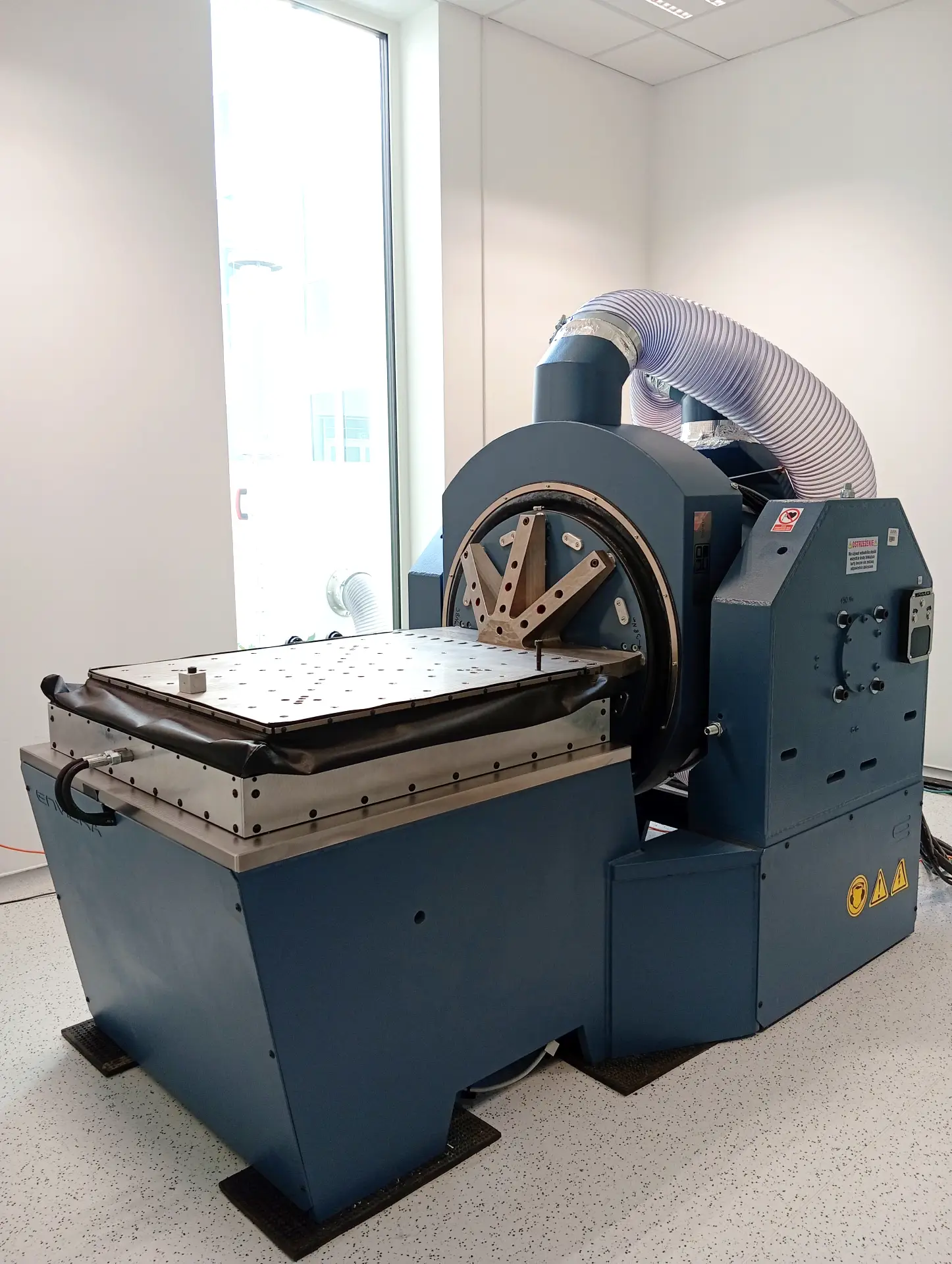
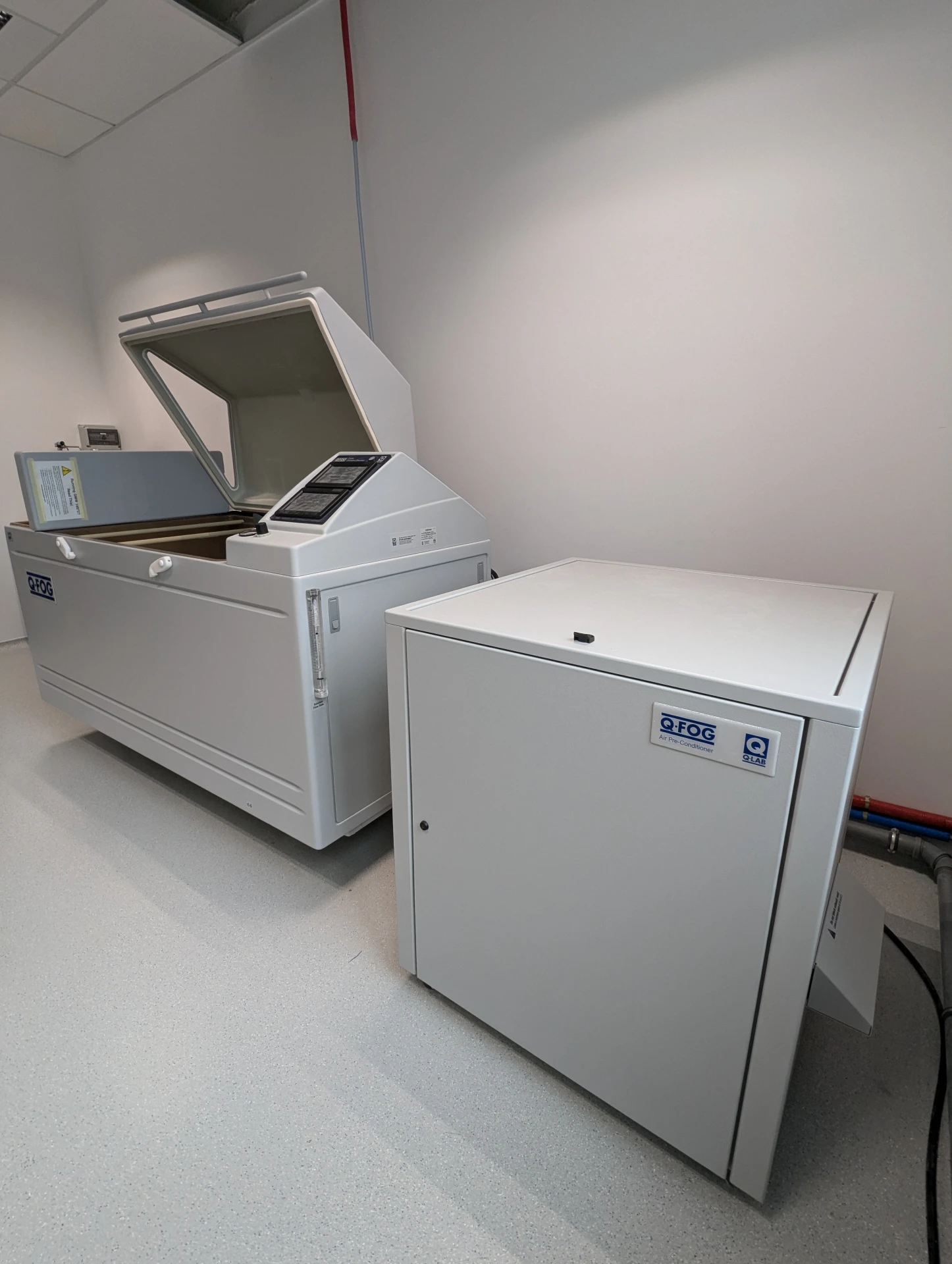
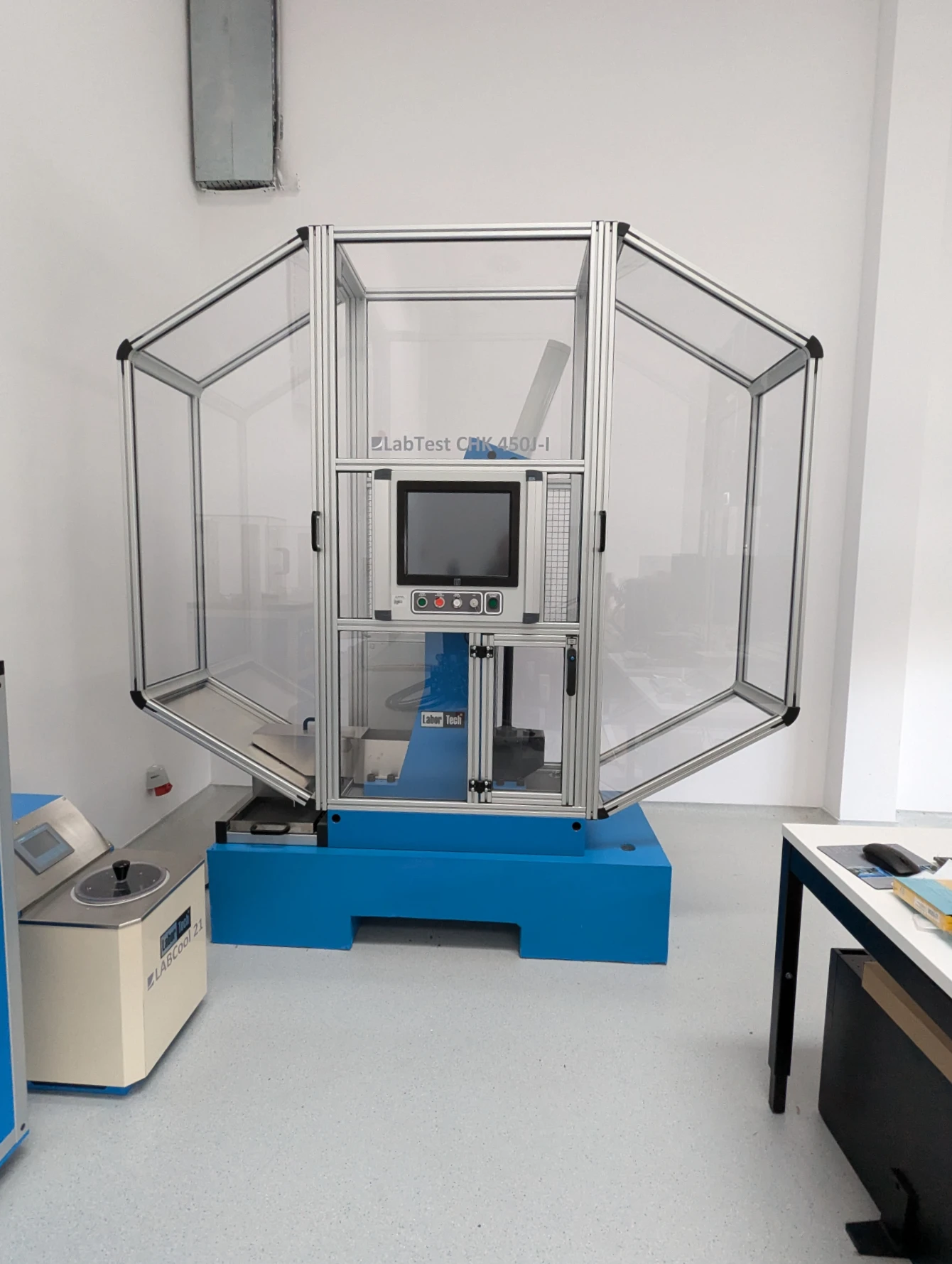
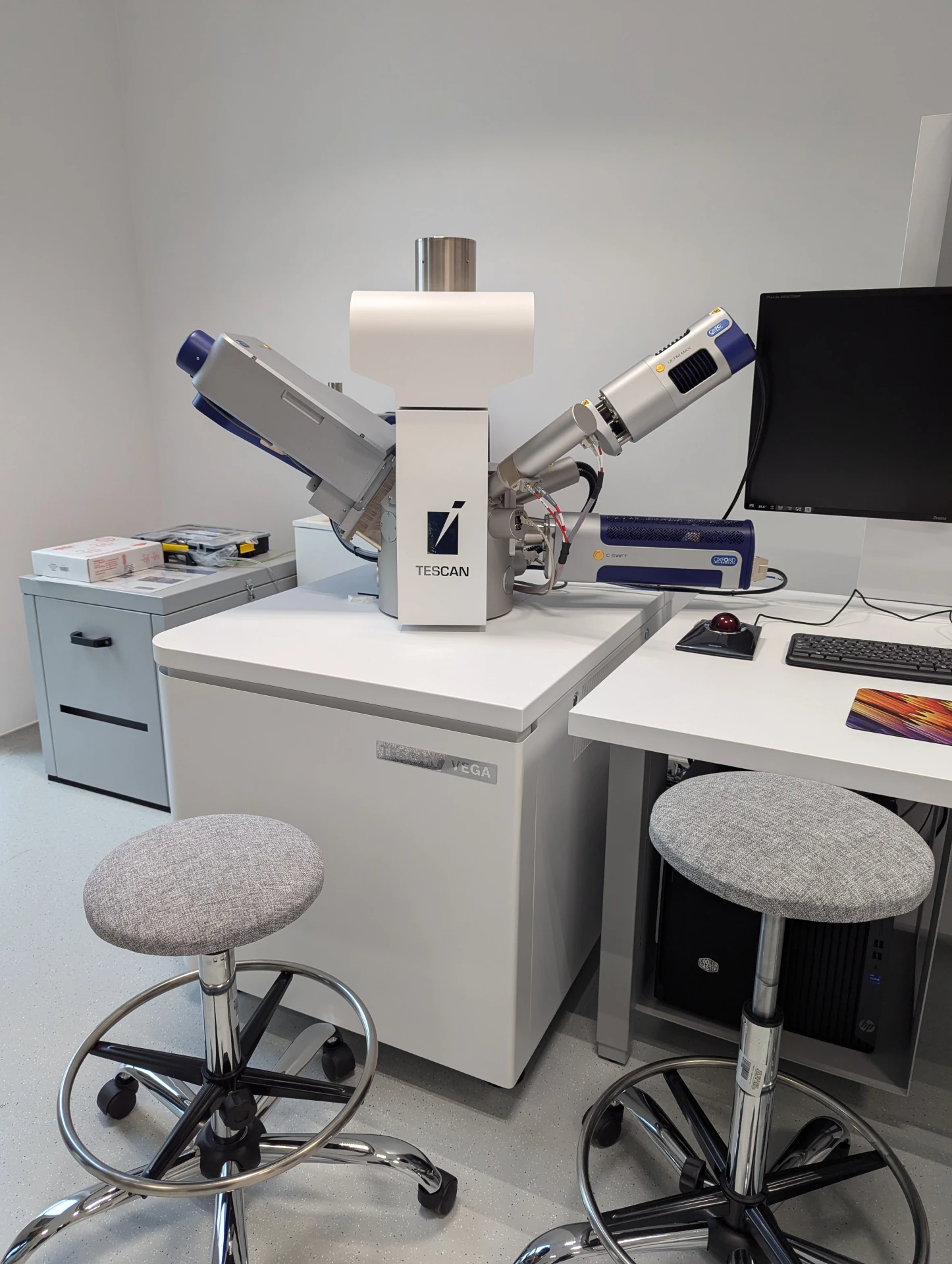
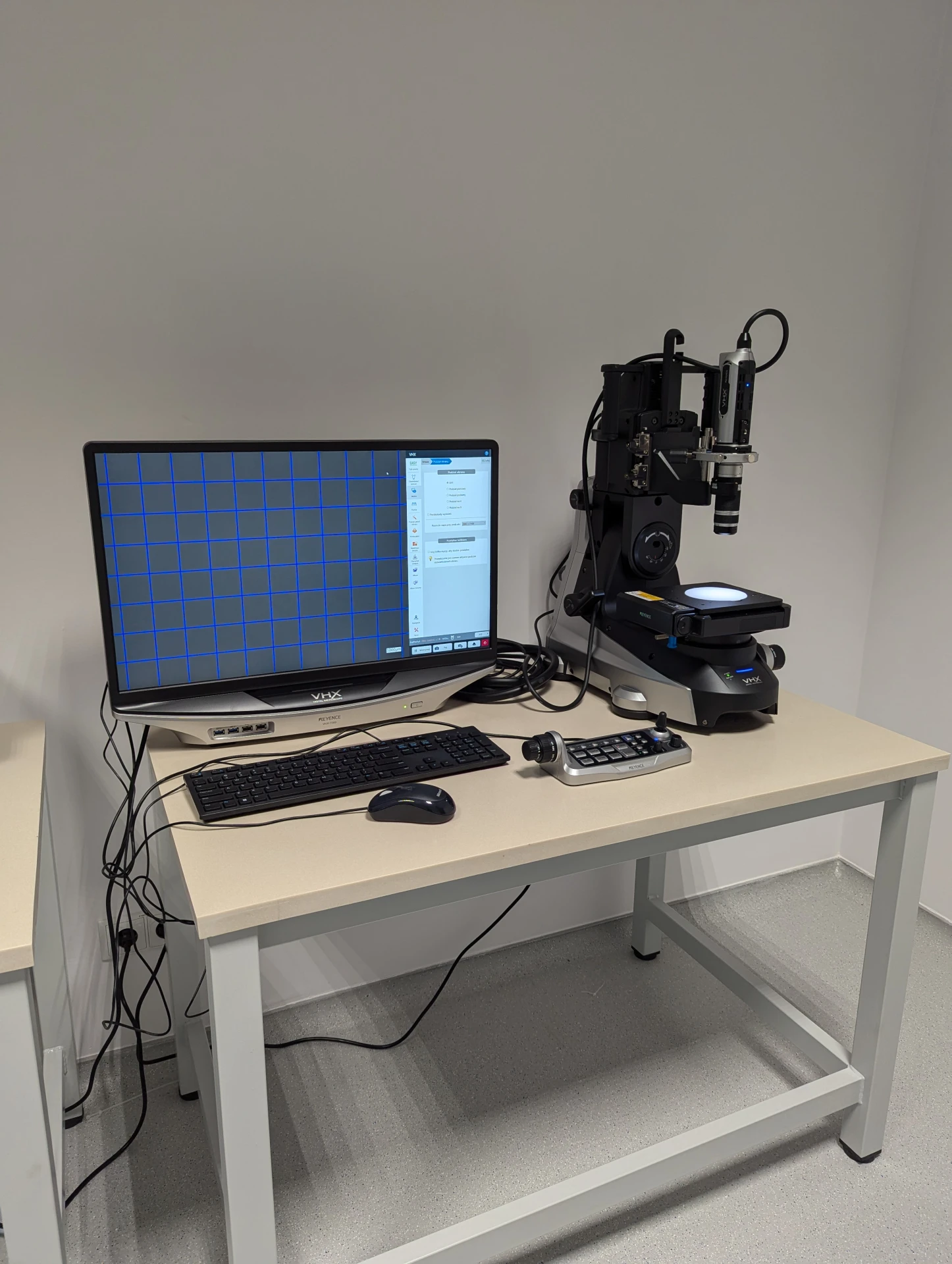
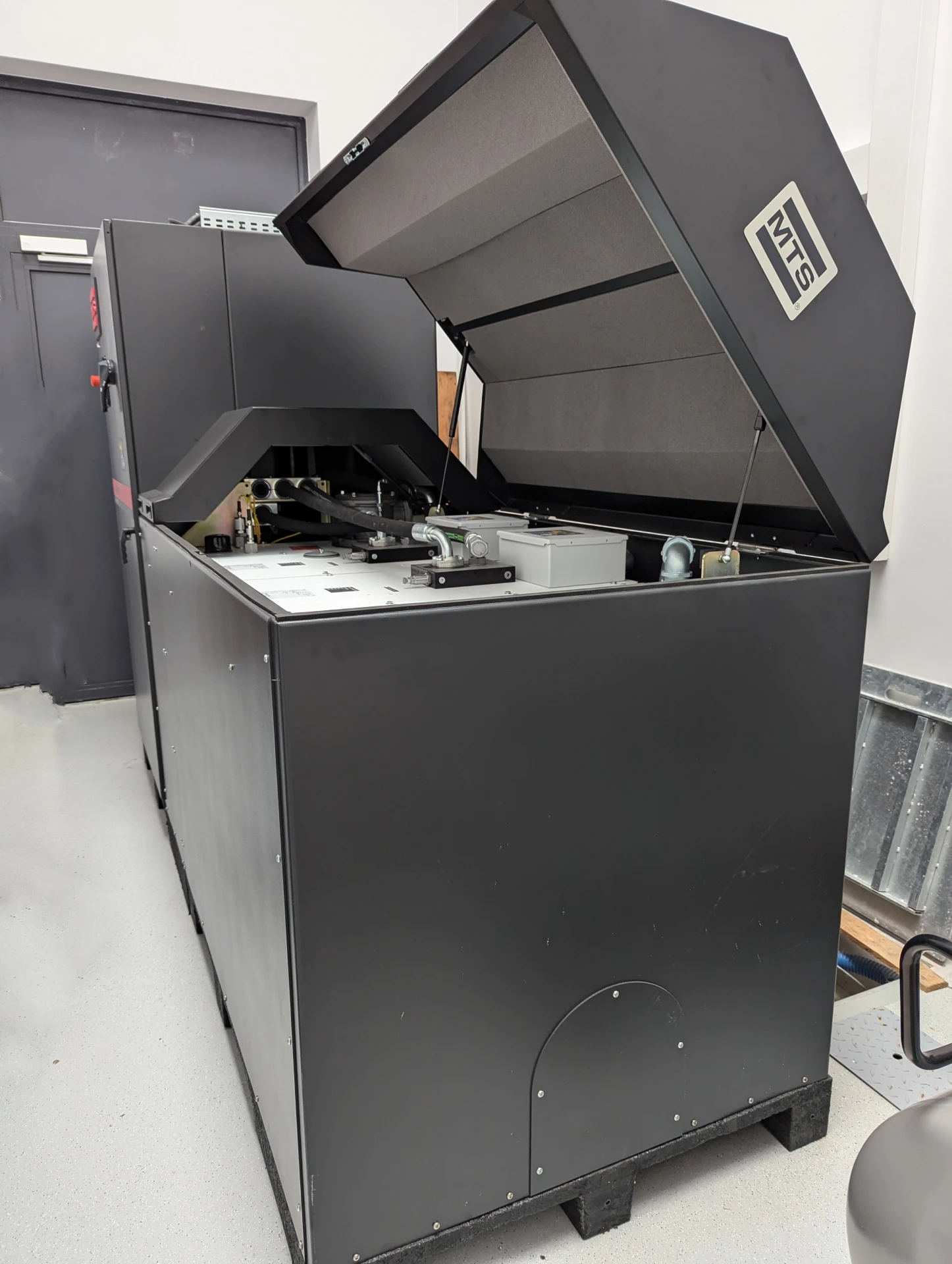
Modern laboratory equipment
The laboratory is equipped with state-of-the-art research equipment, enabling precise measurements and analyses. Key pieces of equipment include:
A complete system for strength testing – enabling static and dynamic tests with loads of up to 500 kN. The system comprises a grooved plate (4000 x 6000 mm) with vibration isolation, a high-temperature furnace and a temperature chamber, as well as a controller with software.
The TESCAN VEGA scanning electron microscope (SEM) – enables the examination of the microstructure of both conductive and non-conductive samples. It is equipped with an EDS X-ray microanalysis system, an EBSD analyser and a spectrometer for measuring wavelength.
Keyence VHX-7000 portable optical microscope – enables the analysis of material surfaces at magnifications of up to 1000x.
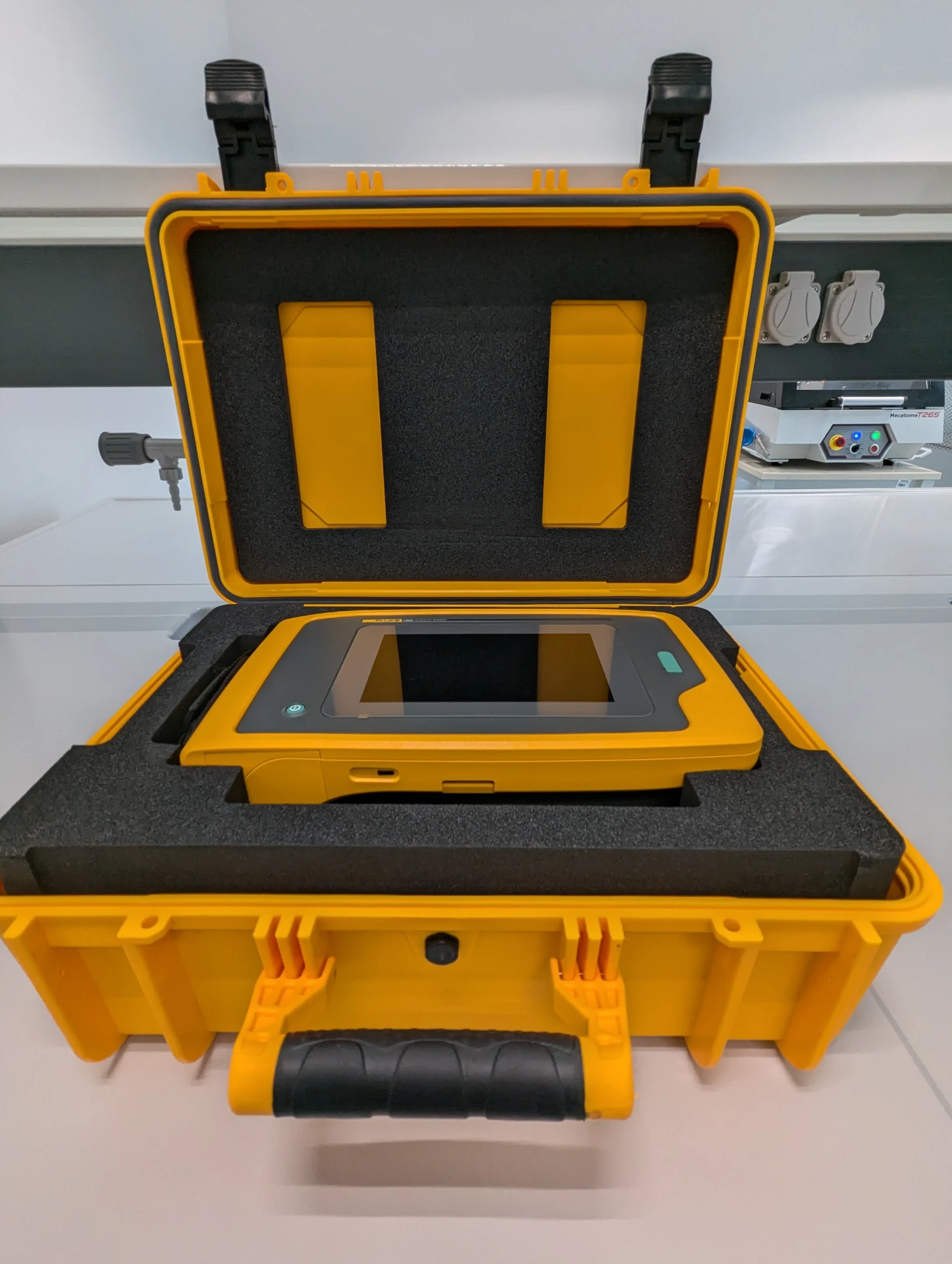
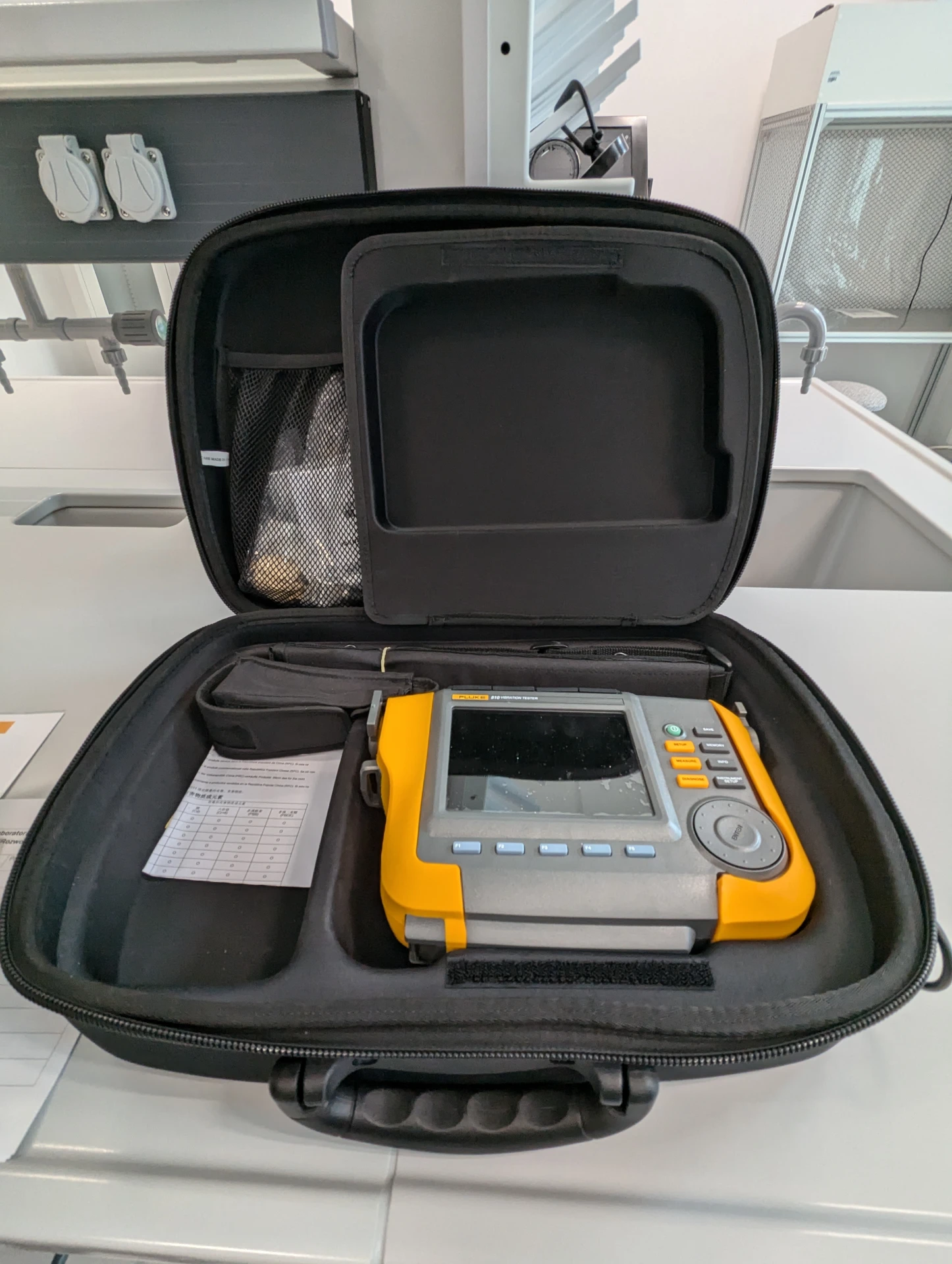
Acoustic camera and vibration testing kit – the acoustic camera uses 64 digital MEMS microphones and operates in the frequency range 2 kHz – 48 kHz. The vibration testing kit enables the detection of faults in mechanical components such as bearings, motors, fans and belt drives.
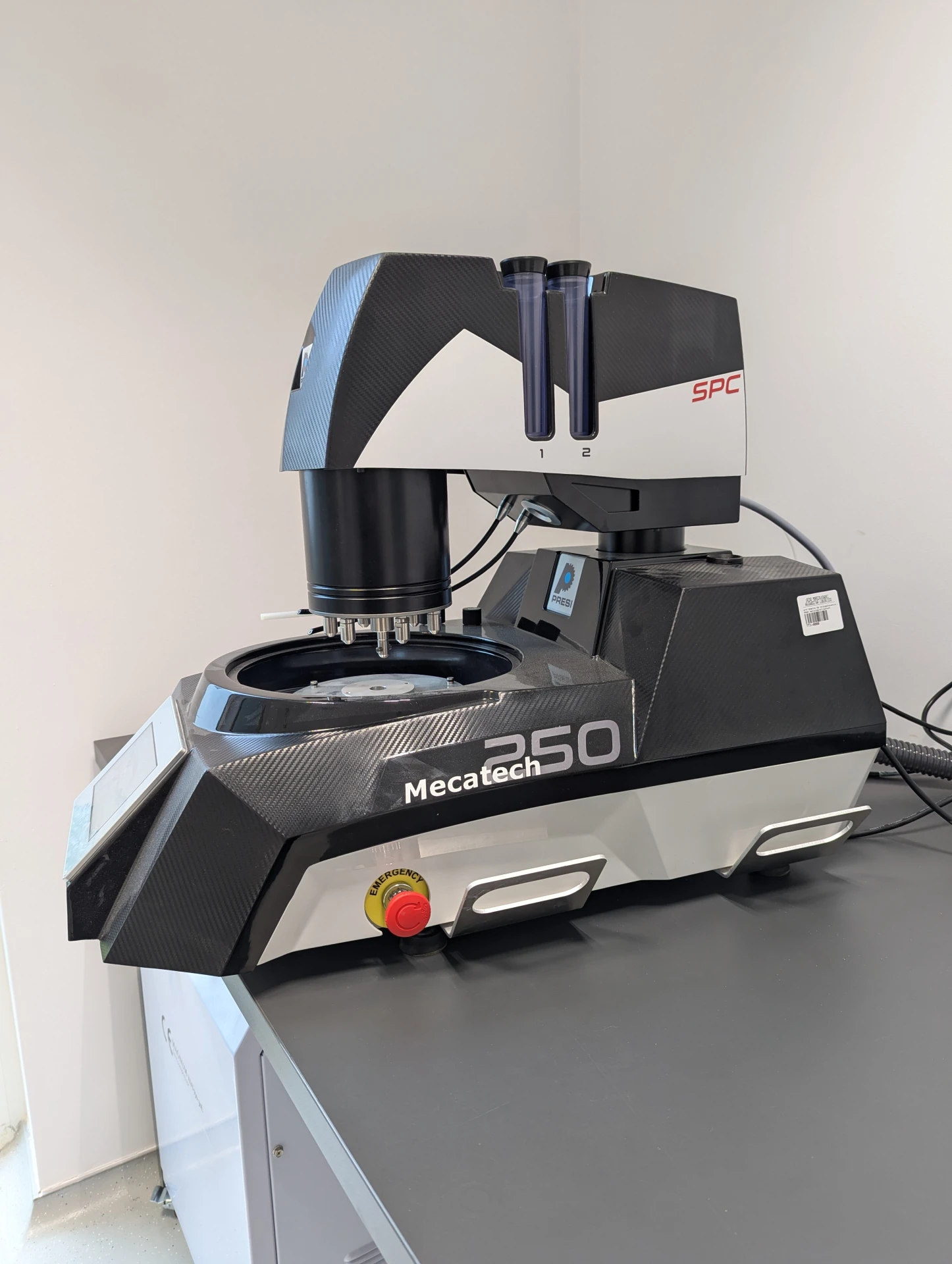
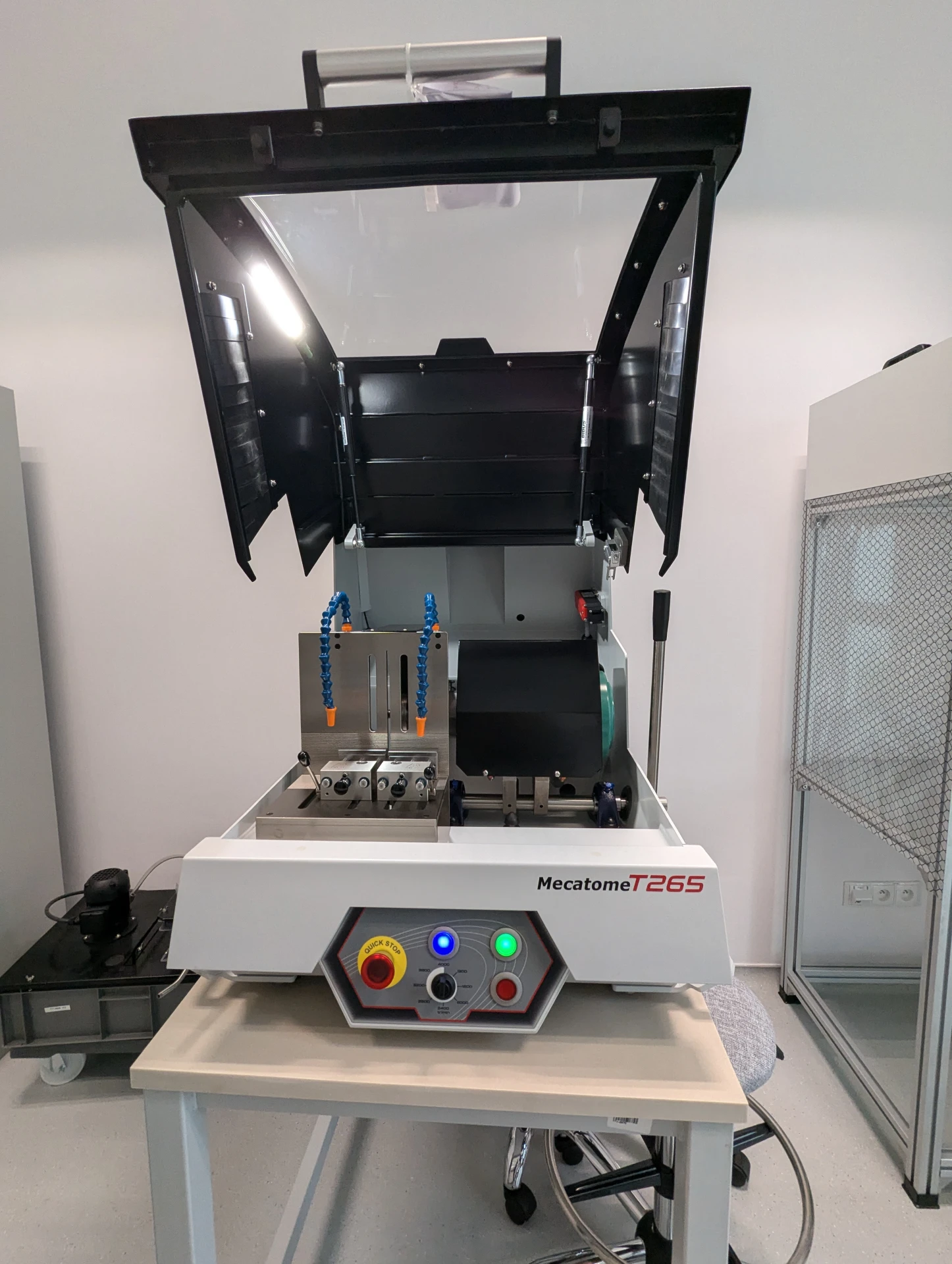
Metallographic sample preparation kit – professional PRESI equipment for cutting and polishing samples for subsequent microscopic analysis: the Mecatech SPI SPC DPC polishing machine and the Mecatome T265 cutting machine.
The Q-FOG salt spray chamber – is used to test corrosion resistance under accelerated laboratory conditions.
The Labortech impact hammer – generates impacts with an energy of up to 450 J, enabling the testing of materials’ energy absorption properties and their behaviour at different temperatures.
Materials engineering – scope of research services
The following services can be provided by the Laboratory:
- Testing of mechanical properties using static test methods (tensile, compression, bending and torsion tests, as well as fatigue tests).
- Hardness testing (static and dynamic hardness tests, scratch tests).
- Testing of properties determined in impact tests.
- Testing of properties determined on the basis of fatigue tests: fatigue strength.
- Testing and analysis of the structure and chemical composition of materials (qualitative and quantitative analyses).
- Testing and analysis of coatings.
- Analysis and testing of joints (welded, heat-sealed, etc.).
- Analysis of defects in 2D/3D parts.
- Surface inspections – corrosion, cracks, inclusions.
- Measurements of layer thicknesses in cross-sections.
- Roughness measurements.
- Testing of structural components and finished products in a simulated operating environment, including simulation across the operating range (with temperatures ranging from -150 ºC to 350 ºC).
Contact
Companies interested in hiring a laboratory or commissioning tests may contact us:
Laboratory Coordinators:
- Agnieszka Kaczmarek-Pawelska, PhD (Eng.) a.kaczmarek@ptklubuskie.com,
- Alan Górecki, Eng. laboratoria@ptklubuskie.com
Infrastructure Management and Laboratory Services Department: laboratoria@ptklubuskie.com
We encourage you to collaborate with us and make use of the Space Technology Park’s state-of-the-art research facilities.